Wednesday, June 6, 2012

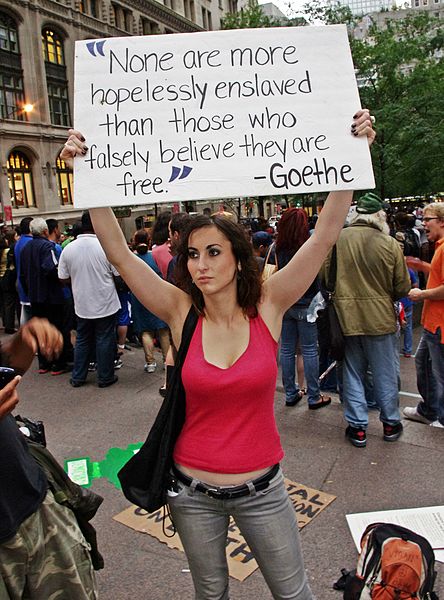
The 99% movement in History: Marcus Manlius

People who follow me on Twitter are painfully aware that my latest reading is Livy's history of Rome. Every few days I tweet the juicy bits, which unfortunately aren't racy. Instead, they're the parts which I feel are applicable to contemporary American society. You should draw your own conclusions about the emptiness of my existence.

(This and unlabeled images from Wikimedia Commons)

The history of the Roman Republic is fascinating, on a number of levels. I find it hard to believe that Hollywood studios haven't discovered some of the stories it contains; there's sex, murder, epic battle scenes, colorful characters, gripping dialogue...

it's not as though those Hollywood schmucks have a surfeit of original ideas from which to choose.


But the most interesting aspect of Roman history for me, (and this is true of history in general) is the way that certain themes echo down the millennia, to be heard in 21st century life. The fact that some things occur over and over in history tells us something very basic and profound about the human condition. The unknown author of the Book of Ecclesiastes nailed this when he said:

"The thing that hath been, it is that which shall be; and that which is done is that which shall be done: and there is no new thing under the sun."

Although there's a case to be made for both air-conditioning and Teflon as exceptions to the general rule.

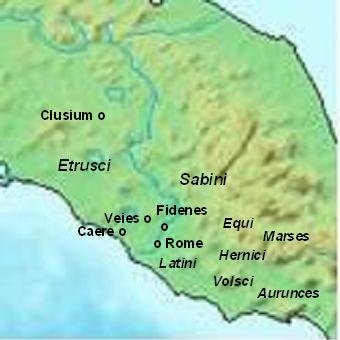
The history of the Roman Republic is the history of two related struggles. One of these was the struggle by Rome to dominate its neighbors. Reading Livy, one can scarcely believe the sheer number of times Rome went to war with the AEquans (no, that's not a typo) and the Volscians and the Etruscans, and a half dozen other people from the Italian peninsula.

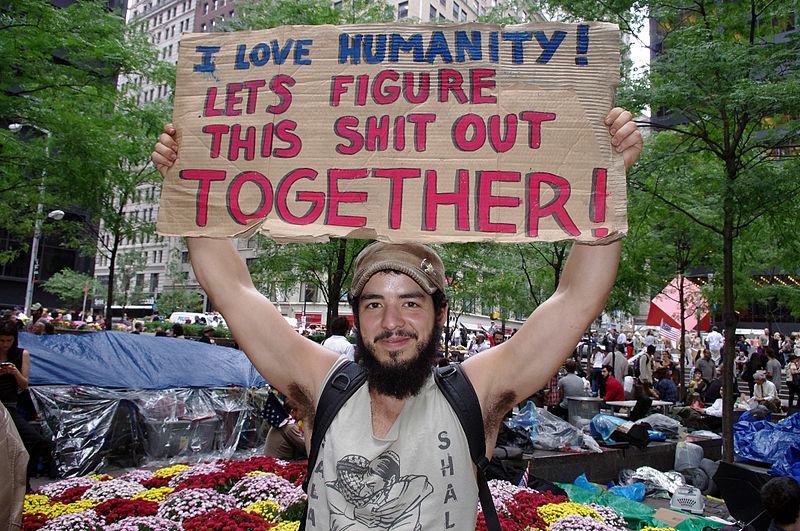
The other struggle was between the Aristocracy and the mass populace. Or, as I like to think of it, between the 1% and the 99%. This struggle went on for the entire period of the Republic, more than 500 years. It was both political and economic. As the mass populace slowly gained more representation and control over the State, the policies of the State slowly began to reflect the economic interests of the masses. The struggle was long, and difficult, and sometimes violent. The masses frequently faced reverses, some of which they brought on themselves by failing to support their own interests.

The entire story is too long to go into here. But I'd like to tell one small part of it; the life and death of Marcus Manlius.

(image from Art.com)

Marcus Manlius was a war hero. In 390 BC, the Gauls captured Rome and burned it. The only resistance left inside the city was a group of citizens holding out in the Citadel, slowly starving to death. The Gauls had problems of their own, and attempted to end the siege by climbing into the Citadel up the side of a cliff. Alerted by the honking of the Sacred Geese, Marcus Manlius led the defense which repulsed the attack.

(image from ancientsites.com)

Nevertheless, Manlius is not treated as a sympathetic figure in Livy's history, being regarded as a demagogue and aspiring tyrant. Unlike contemporary American demagogues, however, Manlius was an advocate for the economic interests of the mass populace. Livy ascribes this to jealousy and ambition, but as a behaviorist I am interested in what Manlius did.

The rebuilding of Rome after the sack left the commoners with enormous debts; having lost everything to the Gauls, people were forced to borrow money in order to rebuild.

And debt was an even more serious matter in those days than in modern times. Interest rates ranged as high as 48% annually, and the delinquent borrower could be imprisoned or enslaved.

(image from FBCSomerset.com)


From Livy:

...the incentives of debt were sharper, as not only threatening poverty and ignominy, but intimidated personal liberty with stocks and chains." And the amount of the debt was immense, contracted by building, a circumstance most destructive even to the rich. 

In an eerie similarity to our current debt crisis, veterans were particularly vulnerable to predatory lenders. One of the precipitating events in the tragedy of Marcus Manlius was the arrest of a Roman Centurion for indebtedness.

When he saw a centurion, illustrious for his military exploits, leading off to prison by reason of a judgment for debt, he ran up with his attendants in the middle of the forum and laid hands on him; and exclaiming aloud against the insolence of the patricians, the cruelty of the usurers, and the grievances of the commons, and the deserts and misfortunes of the man. "Then indeed," said he, "in vain have I preserved the Capitol and citadel by this right hand, if I am to see my fellow-citizen and fellow-soldier, as if captured by the victorious Gauls, dragged into slavery and chains." He then paid the debt to the creditor openly before the people, and having purchased his freedom with the scales and brass, he sets the man at liberty, whilst the latter implored both gods and men, that they would grant a recompence to Marcus Manlius, his liberator, the parent of the Roman commons; and being immediately received into the tumultuous crowd, he himself also increased the tumult, displaying the scars received in the Veientian, Gallic, and other succeeding wars: "that he, whilst serving in the field, and rebuilding his dwelling which had been demolished, though he had paid off the principal many times over, the interest always keeping down the principal, had been overwhelmed with interest: 

And Manlius was one to put his own money where his mouth was:

A farm in the Veientian territory, the principal part of his estate, he subjected to public sale: "that I may not," says he, "suffer any of you, Romans, as long as any of my property shall remain, to be dragged off to prison, after judgment has been given against him, and he has been consigned to a creditor." 

Needless to say, this kind of challenge to the power of the 1% could not be permitted. Manlius was imprisoned.

(image from ABC news)

That didn't work out so well:

On Manlius being thrown into prison, it appears that a great part of the commons put on mourning, that a great many persons had let their hair and beard grow, and that a dejected crowd presented itself at the entrance of the prison... 

...And now the affair fell little short of sedition, for the purpose of appeasing which, the senate, without the solicitation of any one, suddenly becoming bountiful of their own free-will, decreed that a colony of two thousand Roman citizens should be conducted to Satricum; two acres and half of land were assigned to each. And when they considered this, both as scanty in itself, conferred on a few, and as a bribe for betraying Marcus Manlius, the sedition was irritated by the remedy...

...they threatened that they would break open the prison; when that being conceded which they were about to take by force, Manlius was discharged from prison by a decree of the senate.

Manlius continued to agitate for the interests of the Roman commons. Livy attributes the following words to him:

How long," says he, "will you be ignorant of your own strength, which nature has not wished even the brutes to be ignorant of? At least count how many you are, and how many enemies you have. Even if each of you were to attack an individual antagonist, still I should suppose that you would strive more vigorously in defence of liberty, than they in defence of tyranny. 
Collectively you must attempt something, or individually submit to every thing

Dictatorships and consulships must be levelled to the ground, that the Roman commons may be able to raise their heads. Wherefore stand by me, prevent judicial proceedings from going on regarding money


Manlius' message continued to resonate with a populace used as javelin fodder in Rome's wars, and financially exploited when they returned home. Even the putative guardians of the Plebeian's interests were threatened by his growing popularity. Finally...

With the approbation of all, they appoint a day of trial for Manlius. When this took place, the commons were at first excited, especially when they saw the accused in a mourning habit, and with him not only none of the patricians, but not even any of his kinsmen or relatives, nay, not even his brothers... 

When the day arrived, I find in no author, what acts were alleged by the prosecutors against the accused bearing properly on the charge of aspiring to kingly power, except his assembling the multitude, and his seditious expressions and his largesses, and pretended discovery;

He is said to have brought forward near four hundred persons to whom he had lent money without interest, whose goods he had prevented from being sold, whom he had prevented from being carried off to prison after being adjudged to their creditors. Besides this, that he not only enumerated also his military rewards, but also produced them to view; spoils of enemies slain up to thirty; presents from generals to the number of forty...

...after he had recounted his exploits in war, in pompous language suitable to the dignity of the subject, equalling his actions by his eloquence, he bared his breast marked with scars received in battle: and now and then, directing his eyes to the Capitol, he called down Jupiter and the other gods to aid him in his present lot; and he prayed, that the same sentiments with which they had inspired him when protecting the fortress of the Capitol, for the preservation of the Roman people, they would now inspire the Roman people with in his critical situation: and he entreated them singly and collectively, that they would form their judgment of him with their eyes fixed on the Capitol and citadel and their faces turned to the immortal gods

it became evident to the tribunes, that unless they removed the eyes of men also from the memory of so great an exploit, the best founded charge would find no place in minds prejudiced by services.

The trial of Manlius was moved to a location out of sight of the Citadel which he had saved, he was convicted of aspiring to become King, and he was thrown to his death from the very cliff he had defended from the Gauls.

Were Marcus Manlius alive today, I think I know exactly what he'd have to say:


Saturday, May 26, 2012

Why we're stuck with a 2 party system...

or, what the Hard Left doesn't get about basic Comparative Politics.

I should start this by clarifying my own position; I consider myself a Center-Leftist, and a loyal, even passionate Democrat. However, I do not regard the party as being beyond criticism; in fact I view it as a remarkably rickety and haphazard vehicle for the public policies I advocate.

(this and unlabeled images from Wikimedia Commons)

I have no patience for my fellow Democrats who insist we have to coddle the Blue Dogs within our own party. The purpose of politics is policy, not the converse. Blue Dogs who consistently undermine the policy goals of the party and the Administration, who consistently vote to sustain Republican filibusters instead of merely voting against bills they personally oppose...


(from top: Ben Nelson, Evan Bayh, Blanche Lincoln)

well, they can go straight to Hell. It's not as though these losers are able to win elections anyway.

By the same principle, I have no patience for people who think criticism of the President is somehow off limits. Barack Obama is the greatest president of my lifetime. He's brilliant, charismatic, has sharper political instincts than Bill Clinton (and that's going the distance, and taking a victory lap) and is relentless in his determination to do what's right for the country.


But, he's not perfect, he does make mistakes and if we disagree with something he's done, we have an OBLIGATION, as citizens, to bitch about it. These people work for us; they begged us to give them the damned job, and we're entitled to let them know what we think of their performance.

I also want to stress my enormous respect for, and gratitude to the "Hard Left". The Hard Left and the Center Left disagree on some important public policy issues. In the context of leftist political debate, those differences are magnified and personalized, which frequently ends with name-calling, mutual recrimination and an inability to recognize that we agree on far more than we disagree on.


The Center Left has been relatively ineffective in reversing the steady drift to the Right in this country's policies. And while the Hard Left has to bear some of the onus of George W. Bush's claiming the Presidency in 2000, the Center Left failed to prevent his reelection in 2004. It was the Hard Left that gave us the Occupy Wall Street movement, and while some have dismissed the achievements of this remarkable political movement, those achievements are undeniable. 


Occupy Wall Street has made it possible to discuss income inequality in this country. People forget that prior to Occupy Wall Street, the dialogue in this country was entirely misfocused on deficit reduction (Paul Krugman has been a notable exception). The energy and commitment and rediscovery of symbolic political action by the Hard Left has been citizenship of the very highest order. Sniping at them by my fellow Center Leftists is unjustified, unwarranted and so counter-productive to our stated aims and values as to astonish.

But it must be said; the Hard Left is even more intransigent, and a lot less practical. Their unwillingness to work within the Democratic Party will accomplish nothing except the frustration of their ends. Everything to which the Hard Left aspires requires obtaining control of the apparatus of public policy. That control cannot be obtained except by winning elections. And those elections cannot be won, except by one of the two major parties in this country, the Democrats or the Republicans.

I get a lot of populist pushback when I make this claim. Many smart people who I've come to deeply respect insist that I "don't get it", that this is a people's movement, that the old parties are hopelessly corrupt and merely tools of the existing elites. They speak glowingly of a true "progressive party", and insist that I think outside the two party box.

Actually, they don't get it.


There's a very simple reason why we have a two party system in this country, and it has nothing to do with our elites, or my lack of vision, or the corruption of the political process. It's because the way we elect our legislature makes a two party system inevitable. 

Any system of single-member constituencies elected by plurality will result in a two party system.

Let me explain the jargon... the House of Representatives consists of 435 Congressional districts, each of which elects a single legislator. Any number of candidates can run for the seat, but only one will win. This is what a single member constituency is.


You must also understand that politicians are "single-minded seekers of re-election". This is an oversimplification, of course. Politicians are just people. Like all of us, they have multiple roles, and those roles each come with a different value set which determines their behavior. But, when they're wearing their "politician hat", that behavior is monomaniacally focused on winning office. Those whose behavior and values are more complex lose elections, and leave public life. The system selects for electoral monomaniacs.


In a system of single member constituencies, there's only one winner per district. That winner is the candidate with the most votes. It doesn't have to be a MAJORITY of the votes, it just has to be the MOST votes. This is what is meant by elected by a plurality.

In such a system, each candidate must take positions on many issues, in the attempt to get as many votes as possible. Most voters don't care about lots of things, they care about a few things. But those things differ from voter to voter, and so the successful candidate must have appealing positions on a wide variety of issues. Candidates are generalists, and since in the simplified world of political campaigns there are only two sides to every issue...


you get a two party system.


There are alternative electoral systems, but we don't use them in the United States. 

A party list system awards candidates not on the basis of multiple elections in a number of constituencies, but on the basis of the proportion of votes the party obtained nationally. 

In such a system, the party's leaders are at the top of the list; they'll get to hold office if their party wins a certain minimal percentage of the national vote. Their personal incentive, as single-minded seekers of re-election, is to make sure they appeal to enough voters to meet the threshold for representation in the legislature, usually around 5% of the total vote. Anything beyond that is gravy.

Their interests are best served by appealing to voters who are passionately committed to them, on the basis of a few issues. In the United States, such a system might result in a "pro-life" party, a Libertarian Party that would actually hold seats in Congress, a Religious Fundamentalist Party (not unlike the Constitution Party today, but capable of holding seats), a Tea Party, an Occupy Party...

5% nationally is a MUCH easier lift than a plurality inside a single district. You could get 5% of this country to elect Kim Kardashian to Congress...


and, the Republic would fall.

My point is this; the Hard Left's disdain for the Democratic Party is badly misguided. The single member constituency system in this country means they've only got two parties to choose from. Efforts to form a new one are doomed by the nature of the way we elect our leaders.

The interests of the Hard Left, and Progressives generally, are best served by attempting to take over the Democrats, rather than work outside them.

Any other course only serves the interests of Republicans, and the reactionary 1%.

UPDATE: I am indebted to Steve Dorst (@sjdorst) for reminding me that Robert Reich was another voice warning against austerity during the pre-Occupy deficit hysteria. If you're on Twitter, you should Follow him. He's insightful, funny and a generally good guy.


Friday, May 18, 2012

The Conservative Slander Machine

The current news cycle is all about the "Ricketts Plan", a $10 million advertising proposal intended to slime President Obama by linking him to controversial retired minister Jeremiah Wright.

(all images from Wikimedia Commons)

The Plan has been described as "racially charged", with complete justice. It refers to the President as "The metrosexual black Abe Lincoln" (p.8). It invokes Oprah, (p.11), guarantees that both the president and the "liberal press" will "play the race card" (p.11) and shamelessly fishes for numerous bigoted racial archetypes. Examples are the "angry black man"  (pp.11,27,30,35), the "slick hustler" (pp. 8,21,22,37) and the "likable fool" (pp. 6,8,9,19), but the truth is you can find the crudest imagery on every page, including references to hitting the President "right between the eyes", "inflaming public opinion" and the need to find "an extremely literate, conservative African American" spokesman.


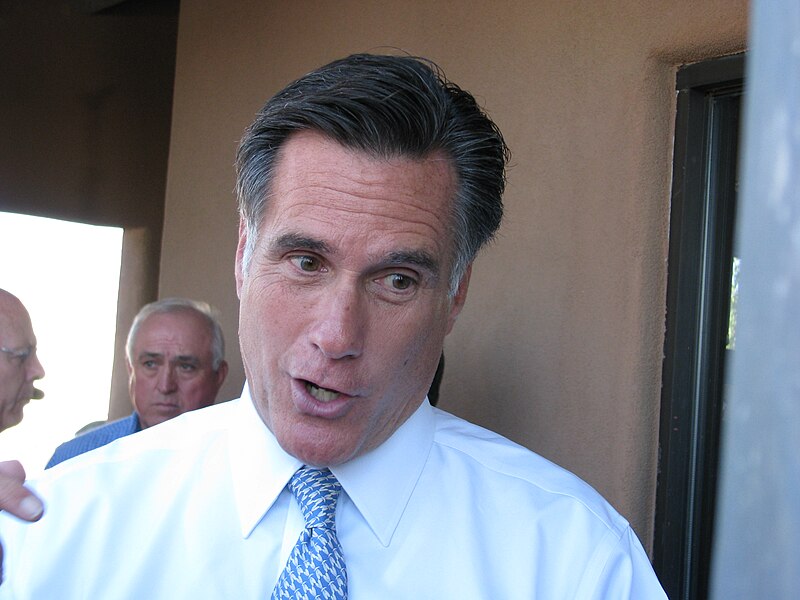
Not surprisingly, the GOP establishment dropped it like a live grenade. The ink hadn't dried on West Coast editions of the NYT before Mitt Romney had a statement out condemning the campaign. Ricketts made haste to do the same. Ending Spending, Ricketts pet super-PAC, disavowed the campaign as an organization...

and the Beltway punditry all shook their heads wisely and agreed that Fred Davis (who looks pretty metrosexual himself) had badly miscalculated the amount of overt sleaze permissible in a modern American Presidential Campaign.

(Image from Strategic Perception, this White, Metrosexual, Andrew Jackson's corporate website) 

Which is a lot of smug, lazy, self-congratulatory and ahistorical bullshit. While the document itself is positively amateurish in its presentation (a high school English teacher would run out of red ink trying to correct the basic composition errors in the text), it absolutely epitomizes the Lee Atwater brand of Republican politics. Nothing has been out of bounds to Republicans since 1980. They'll say anything if they think it will work, and worry about the consequences later. If they win the election, they've got institutional tools to shield themselves from any fallout. If they lose, no one will remember what they did anyway.

Consider some of the lowlights of the last few decades. remember "White Hands"?


Or the Swiftboating of John Kerry

David Corn absolutely nailed the impetus behind the ad pitch tonight on Hardball, at 1:43 of this clip. A Republican hired gun pitched a venemous smear campaign to a reactionary billionaire in anticipation of a big payday.

Because it's the kind of hatchet job that perfectly reflects the anger and suspicion and prejudices and fears of reactionary billionaires who regard themselves as the author of all society's wealth.

For 8 years we saw the most ludicrous charges made against Bill Clinton: MenaVince FosterTroopergate, the Arkansas Project, and all of it funded by notoriously right-wing billionaire Richard Mellon Scaife

(Image from the Pittsburgh Post-Gazette, an actual newspaper and not from Scaife's hobby paper and slander rag)


Fred Davis may not know how to write a presentation using complete sentences, but he absolutely knows his target audience. There's absolutely nothing in the Rickett's Plan that hasn't been used, over and over again, by the GOP.

Not only is this stuff typical, all the repudiations following the Times piece notwithstanding...

it's the Platonic Ideal of a Republican campaign. I promise you, we're going to hear every element of the Ricketts Plan this Summer and Fall.

Even if Joe Ricketts isn't paying Fred Davis to do it.


Friday, May 11, 2012

Mitt Romney: Enabling the Wall St. Gambling Addicts

So apparently JP Morgan has managed to piss away $2 billion in what they've been claiming was a hedge scheme, designed to minimize their risk on loans, but which in fact became an important generator of profits in its own right.

(All images from Wikimedia Commons)


If this sounds familiar, it's because it's PRECISELY the kind of greed that helped cause the Bush financial crisis. The irony is particularly sharp when one considers the fact that Jamie Dimon, the CEO of Morgan Chase, has been insisting that the financial crisis is NOT grounds for additional regulation of the financial markets. He has pointed to his own firm's avoidance of the worst consequences of the meltdown as evidence that competently managed financial institutions are perfectly capable of moderating their own behaviors, and not dragging the entire financial system into another debacle, like the one we're still trying to climb out of.


It's all arrogant bullshit, of course. I'm sure Mr. Dimon thinks he's much smarter than the rest of us, and of course he's got his net worth of $200 million to PROVE how much smarter he is than all the rest of us. I mean, anyone that rich MUST be smart, right?


In fact, gross differences in human "intelligence" don't exist, outside organic brain damage. Human intelligence is constrained by our neurology, and the very brightest among us make the same kinds of mistakes in the same set of circumstances, over and over, as though we were no brighter than a chimp.


Dimon's compensation is a function of how much his company makes, and his company makes more money on risky investments than it does safe investments. The other side of the equation is not true. If JP Morgan Chase loses its shirt, Dimon still makes his base salary of $2 million. The incentives here are to maximize profit, not minimize risk. This is also true of the people  who work for Dimon; Ina DrewAchilles Macris and Bruno Iskil. If you pay people to gamble, they're going to gamble. They may deny gambling, they may insist they're not gambling, they'll probably convince themselves that what they're doing isn't a gamble for anyone as smart as they are...


but, they'll gamble. Preferably with the shareholders money, rather than their own.


None of this is a surprise to anyone, except for the megalomaniacs on Wall St. and the sheep who keep buying their self-promotional bullshit. But this latest teachable moment gives us another metric by which to measure Willard Romney.


Romney has claimed, loudly and frequently throughout the primary that financial regulation, and particularly Dodd-Frank, are not only unnecessary, but actively harmful. He has pledged an outright repeal of the legislation, while remaining characteristically vague about the regulations he'd replace it with.


On the surface, it's an odd position for a candidate for national political office to take. A recent Harris poll demonstrated overwhelming popular support for stricter regulation of the nation's financial institutions.

But of course, Governor Romney has his reasons for advocating less stringent controls on the titans of industry who nearly destroyed our economy.

This latest debacle provides an excellent reality test of his public assertions regarding the need for and effects of such regulation.

Tuesday, April 17, 2012

The 1% think you're a marionette.

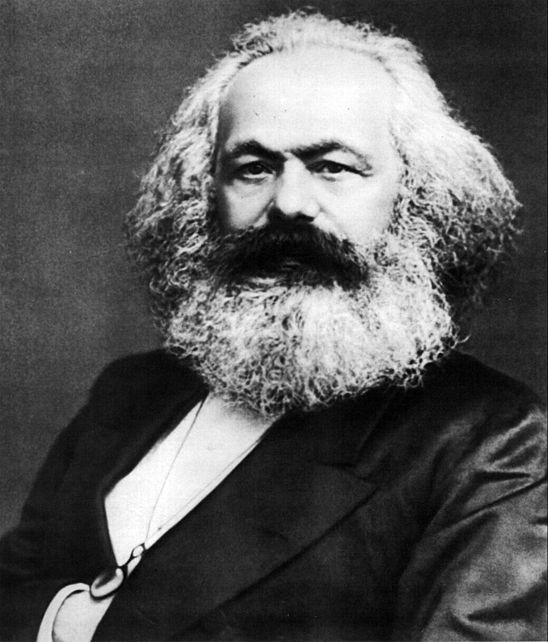
We Liberals get called Marxists a lot, particularly by Tea Baggers. It's a stupid thing to say; most of them know exactly the same amount about Marx as Glenn Beck. Because, that's where they learned it.


(all photos from Wikimedia Commons)


But the truth is, Marx is extraordinarily useful if you can ignore his pretensions. His claims that he discovered a "science of history", his predictions regarding the future course of civilization, even his analysis of the history of economic relations can all be safely dismissed. But as a critic of Capitalism...


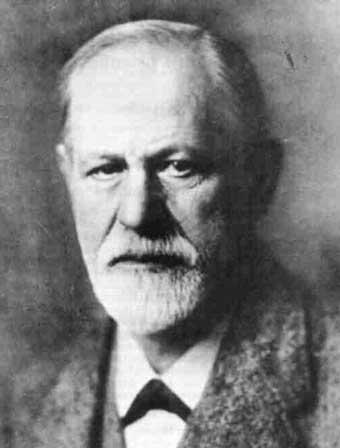
well, he's Freud. His insights more than make up for his goofiness.


Of particular interest is his concept of commodity fetishism. This idea has been worked over and modified by a number of different thinkers since Marx, but the most simple explanation of it is this: commodity fetishization is the attribution of characteristics to a commodity which it does not objectively possess.
And, with one stroke, we can explain the phenomenon of advertising in its entirety.

Classical economists, (and apologists for the American practice of Capitalism) will insist that the primary purpose of advertising is informational. It conveys price and quality information to potential buyers, and so "lubricates" market mechanisms.

In fact, the primary purpose of advertising is the fetishization of the commodity. Motorcycles become symbols of virility. Realtors become selfless guides to a family's happiness. And you can lose your "man-card" if you don't drink a really shitty, cheap, rice-based beer fermented with enzymes. (Sorry, that one is especially laughable)


I get several different responses to this idea.

"I don't buy that stuff because of the ads, I buy it because I like it!" OK. Why do you like it? And the end point of such discussions (just before the part where they call me an asshole) is inevitably "I just do!"

"Who are you to tell me what I should like?" I don't care what you like, specifically. I am fascinated with the reasons why you like it, and what the implications are for neoclassical market theory. If demand for a commodity is more than a function of its quality and price... if demand can be stimulated by associating a product with qualities it doesn't objectively possess...

then the incentive to maximize quality and minimize price is reduced for producers. Or eliminated completely.


"If people are dumb enough to fall for that shit, they deserve it." Well, maybe. That's an opinion though, not an objective fact. And it's completely unrelated to the justifications apologists for Capitalism make for Capitalist practice.


(Capitalism apologist and welfare recipient Ayn Rand)

(Milton Friedman, who thought Democracy couldn't exist without Capitalism)

The fact of the matter is this; "capitalism", and "free market" are concepts which themselves have become fetishized. The meaning attached to the words has gone beyond mere description. They have become legitimizing symbols of the current system; when Americans hear the words something inside them stands up and puts its hand over it's heart.


But "capitalism", as practiced in the United States has nothing to do with free markets. Capitalism is rather the "privileging" of accumulated capital in the market, at the expense of actors with less capital. It is the institutionalization of power asymmetries in order to maximize the profits of capitalists, irrespective of supply, demand or quality.


And one key element in this power imbalance is commodity fetishization. They're not selling you masculinity, you dumb shit....


They're selling you a truck, when what you probably need is a car.

Tuesday, April 10, 2012

Pens v. Flyers, Round 1 of the '12 NHL playoffs

With apologies to regular readers of this blog who aren't hockey fans (that would be all three of you) it's the very best time of the year. The best teams in the best sport in the world are about to contend for the single most difficult championship to win of any sport since gladiatorial combat implemented the concussion rule. All stats via ESPN.

(image from mario-lemieux.com)


Even Strength: Advantage Pens

Pens Goals per Game Avg. 3.33 (1st in league) Flyers Goals Against per Game 2.74 (20th)

Flyers GPG 3.17 (3rd) Pens GAA 2.66 (14th)

This shouldn't surprise anyone, with the possible exception of Flyers fans, a loathsome collection of syphilitic congenital idiots whose collective stupidity is equalled only by their nastiness (they once booed Santa). The Pens will deploy the greatest player in the world, this season's winner of the Art Ross Trophy and no fewer than 4 additional players with 20 or more goals this year.

(image from sidcrosby.blogspot.com)

The Flyers will counter with the formidable Claude Giroux, a Jaromir Jagr on the wrong side of his expiration date, and Scotty Hartnall, assuming Hartnall hasn't been jailed by the time the puck drops.

At even strength, we're a better offensive team than they are, and we're better defensively as well.

Special Teams: Advantage Pens

Pens Power Play 19.7% (tied with the Flyers for 5th) Flyers Penalty Kill 81.8% (17th)

Flyers Power Play 19.7% (5th) Pens Penalty Kill 87.7 (3rd)

The Pens advantage is even more pronounced on special teams. The Flyers have a very good Power Play; it's almost exactly as good as that of the Pens. Their Penalty Kill is merely mediocre, however. Ours is outstanding. In theory, this should allow us to play with a little more of an edge than Philly, but the truth is these two teams hate each others guts. Both teams will be chippy, but we have a better chance to make them pay for their transgressions than they do ours. If Brooks Orpik can keep Hartnall out of the crease, the Flyers become much less scary.


Goaltending: Advantage Pens

Fleury Save Percentage .913 (26th) Bryzgalov Save Percentage .909 (32nd)

The Pens advantage here is perhaps less clear cut than in any other category. While Fleury is capable of extended stretches of phenomenal play, he's also infamous for giving up the occasional soft, fat, inexcusable goal in the first 5 minutes of a playoff game. That won't be helpful, if he does it again this year.

(image from post-gazette.com)

The Flyers won the season series against the Pens, but as any hockey fan knows, the playoffs are a brand new season. I have a tough time imagining the Flyers doing anything other than giving us everything we can handle. But the statistics indicate the Penguins will win this series in 4 games.


Thursday, April 5, 2012

Reality testing Naomi Wolf.

I like to think of myself as well-informed. I read a lot. I follow the news very carefully, even obsessively. But until I started using Twitter last year, I was blissfully unaware of just how bitter the split was between Center Left Democrats and the Hard Left.

(this and unlabeled images from Wikimedia Commons)

I knew the split existed, of course. I spent the entire 8 years of the Bush administration bitching about Nader voters who delivered our country into the hands of the neocons and Wall Street grifters. But as I figured Twitter out, and began to find people to follow, I realized that many of the people on both sides of the divide *REALLY* hated each other. Fairly prominent people on the Hard Left, some of whom are national figures, refer to supporters of President Obama as "Obamabots", and regard them as sell-outs and dupes of an administration that is just as deeply in the tank for the 1% as any Republican. 

Some on the Center Left refer to people on the Hard Left as "Emo-progs", and regard them as hopelessly impractical, naive, and unwilling to do what must be done to gain control of the public policy machinery that will allow the Left to move the country in a more civilized direction. And some of them are pretty quick on the draw with accusations of racism if they feel the President is being attacked (at least from the limited perspective of a white guy who's never had to face racism).

It's a stupid fight; the two sides need each other and the fact that the split exists is evidence that ANY group of human beings will divide into smaller sub-groups when the environment has them focusing within the group rather than externally to the group. But that's not what I want to talk about at the moment...


Twitter was a great place to be during the height of Occupy Wall Street last year. It allowed me to follow the movement without the mediation of the corporate media. It introduced me to the breathtaking possibilities of social media as a tool of social change. It introduced me to the incredible power of citizen journalism. And it provided a window into the thinking of other Leftists.

It also exposed just how shallow, conspiratorial, badly informed and knee-jerk some of that thinking was. There's an entire faction of Center-Leftists that simply freak-the-fuck out at ANY criticism of the Obama Administration. And there's an even bigger faction of Hard Leftists that will not give this President ANY credit for any of his incredible achievements.

Many of these Hard Lefties are particularly angry about the Administration's intensification of the use of drone strikes, but they're pretty angry about damned near everything. These are the people that stopped fighting for ACA when we didn't get the single-payer bill we would have preferred. These are the people that cited the President's signature of NDAA as proof he was no different from the Bush Administration. And these are the people who swallowed Naomi Wolf's utterly fact-free assertion that last November's crackdown on the Occupy Movement was coordinated by the Department of Homeland Security at the behest of Congress, who were afraid that somehow OWS was going to keep them from using insider knowledge to engage in insider trading.


I had some good arguments with people on Twitter about this claim. I had some bad arguments too, but that's the nature of social media. Rather than rehash them, I refer you to  Joshua HollandAngry Black Lady and Karoli, all of whom ably refuted Wolf's assertions at the time.

This is an old story; months have passed and the entire controversy has been buried by the controversies over NDAA, and forced trans-vaginal ultrasound, and the Republican primary battles. But yesterday, President Obama signed into law the "Stop Trading on Congressional Knowledge" Act, or "STOCK" Act for short.

It's NOT a great bill, any more than ACA was an ideal solution to the healthcare crisis in this country. But like ACA, it represents an improvement in the status quo, which is really all one can hope for in a polarized country with a largely apathetic and inattentive electorate. It's an incremental step towards a much more ambitious goal.


But it represents a complete falsification of Wolf's hypothesis. She posits a Congressional reaction to a perceived threat to their ability to make money on insider knowledge. That reaction was so strong that it lead to Congressional orders to DHS to clear the OWS campsites. And yet we now have the passage of a law that limits the ability of Congress to do that very thing.

I have no faith that members of the Hard Left who swallowed this particular fish will change their mind. The speed with which Wolf's charge spread, and the uncritical acceptance of it by so many, tell us something important. The image of a nefarious conspiracy by rich politicians against an heroic popular movement is one consistent with the existing beliefs and value system of the Hard Left. They WANT to believe this; if true it would represent an affirmation of everything they believe about our society. But it's a simplistic view, as conspiracy theories always are. And Wolf's theory; of a "chain of command" that goes from DHS through Peter King (?) to Congress, is simply not consistent with the passage of STOCK.

This will convince no one who wants to believe. Cognitive Theory tells us that information inconsistent with existing beliefs is either altered so as to become consistent, or is forgotten entirely. But at the time I was having all those arguments on Twitter, I engaged in "expectational disconfirmation". I asked people who believed Wolf's interpretation of events to predict what would happen next. And every one of them predicted more action by DHS, increased illegal surveillance of the movement and the rapid movement of the United States towards a police state. Not ONE of them foresaw any action by Congress to limit their ability to act on insider knowledge.

This is why we call it Social SCIENCE. You observe, hypothesize, predict, and then you TEST YOUR PREDICTIONS. If your predictions are inaccurate, you revise your hypothesis. If subsequent events are inconsistent with your views, you admit it.


At least, that's what you do if you have any intellectual integrity.

http://www.addictinginfo.org/2012/08/14/obama-administration-advised-police-to-not-arrest-occupy-protestors/

http://www.mumsnet.com/Talk/mumsnet_live_events/1556371-Naomi-Wolf-Live-webchat-Thursday-6-September-12-midday-1pm