Tuesday, February 7, 2012

And People don't think Nebraska is interesting..


(All images from Wikimedia Commons, unless otherwise noted)


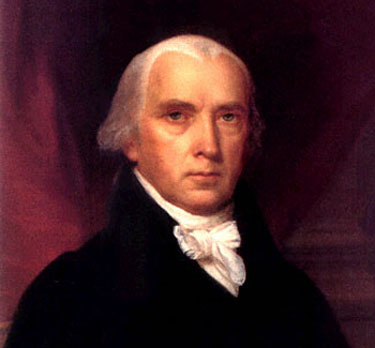
Bob Kerrey has decided against running for the Senate seat Ben Nelson is fleeing this year.
I anticipate a remix of the wailing and lamentations I saw on Twitter last year, when Nelson announced he wouldn't be running for the seat.


Concern is warranted. Democrats are defending 23 seats this year. Republicans are only defending 10 . A loss of 7 of those flips control of the Senate to the Republicans. And if you thought these assholes were an impediment to public policy when they were a minority...

well, I lack a tasteful metephor. But a tasteless metaphor might involve the term "impaction".


Of all the Democratic seats at risk however, this one always seemed like the toughest to hold. Nebraska is 86 % white, 90 % Christian, and has a 14 % registration advantage for the Republicans. Looking at this realistically, holding Nebraska's Senate seat is damned near impossible, and our best case scenario for 2012 may be to eke out a single electoral vote from their weird apportionment scheme.

This is why Ben Nelson isn't running, of course.  And it's why Kerrey, who recently bought property in the state, has decided to pass.

Nebraska is too big a lift for a DSCC with 22 more winnable races to defend, it's too big a lift for bundlers with more viable candidates desperate for their dollars, it's too big a lift for a White House distracted by its own election issues in this most lilly of white states.

Which makes it perfect for low stakes gambling.


In the 2008 presidential election, 63 % of Nebraska's electorate turned out to vote. They were and are largely white Republicans. Confronted with an untenable path to victory given the likely electorate, the obvious strategy in Nebraska must be to expand the "scope of conflict" . We need a GOTV effort aimed at habitual non-voters, and a candidate who can mobilize them. Running a younger, less blatantly cynical version of Ben Nelson isn't going to cut it; if Ben Nelson could win that seat, he'd be running for it.

I will not pretend to have done an extensive demographic analysis of Nebraska non-voters. But my suspicion is that they might be mobilized around issues of class, economic justice and income inequality.


(image from KVNO news)

A fire-breathing progressive, in  the school of Robert La Follete or Teddy Roosevelt might well be more successful in mobilizing habitual non-voters than another drab establishment Democrat, whose public policy stands are indistinguishable from those of a Republican.


And it is worth noting here...

the purpose of politics is to make good public policy, not to win elections. No policy can be made if you don't win elections. But elections that undermine good policy, don't do the country any good, either.  The lackluster, timid career of Ben Nelson detracted from the benefits that health care reform, the stimulus and filibuster reform have and will provide to the American people.

Monday, December 12, 2011

Youthful cockiness.

I keep seeing a lot of arrogance from some Progressives in the Twitterverse. Typical views are "there's no way Obama can lose" and " the Republican field can't produce a threat to Obama." I always wonder how old these people are.


(photo from Young Democrats of Maryland)

I'm old. I don't like to think about the number of elections I've seen where the best candidate lost to a clear dunce. This country elected a senile actor over a nuclear engineer. We elected Dubya over a war hero.


(Image from Countmeblue.blogspot.com)


Elections are about more than who's the best candidate. External economic factors could intervene. If gas hits $5 a gallon, very few incumbents will win, from either party. There could be a scandal. We simply have no idea who's going to win, yet. 


(Image from wikipedia)

Furthermore, we're talking about an electorate that is expending zero bandwidth on politics right now. They won't get interested until this summer, as the conventions approach.

The economic and historical "context" of a presidency is typically more important than the personal qualities of the president.


Paul Light
Paulette Goddard Professor of Public Service


(at least, I think I'm echoing Dr. Light's work here.  I could be misremembering)

Finally...

the media WILL have their counter-narrative. Professional considerations will cause the media to find reasons for Obama to lose or why he should lose. It's a much higher percentage move to write a story which conflicts with the conventional wisdom than to write 1 of 100 identical CW stories, by 100 faceless writers. That's true even if you're wrong, and the CW is right.


Monday, October 17, 2011

So, I try to look at modern human civilization in all its complexity, with its massive population growth relative to most of our species existence, the variety of ecosystems successfully colonized, the incredible sophistication of material culture compared to even a few centuries ago...


achieved by an organism that (human megalomania notwithstanding) that is really nothing more than an overly specialized scavenger...


and I am astonished at the sheer, baroque complexity generated by the simple accumulation of 9000 years of inter-glacial agricultural surpluses.


And, its fragility.


Sunday, August 8, 2010

I didn't write this, my brother did. But it's worth reading.

Why We Hate the Oil Companies is a book about energy, the economy and politics.  I became aware of the book during the BP oil spill in the Gulf of Mexico.  The author, John Hofmeister is the former President of Shell Oil, in North America.  Each night, despondent, I watched Anderson Cooper or Campbell Brown on CNN interview various pundits, interested parties, stakeholders, etc.  Frequently John Hofmeister was the industry “expert”.  I heard him speak about the limited options considered by the various leaders in resolving the oil leak compared to the much broader set of choices, often unconsidered.  He would say some things that challenged my personal views.


    I have been trying to find the video clip of an interview where he was challenged on the intrinsic safety of deep-water drilling.  His response, paraphrased was that oil companies do deep-water drilling because they are not allowed to do the much safer shallow-water drilling.  I believe there may be good reasons to not do shallow-water drilling, however – it never occurred to me that we had much more accessible, and safer to reach oil closer to shore.  It was his statements that I could not readily place within my base-knowledge, either to affirm or deny that made me curious about his book as its title flashed beneath his name, night after night, during the oil spill.


    In the book, Mr. Hofmeister builds the following case.  First, a clean, post-industrial economy of the future will use more energy, not less than an old-line manufacturing economy.  For example, “The comparatively low cost and plentiful supply of energy throughout the 1990s and the first years of the twenty-first century helped drive a low unemployment rate and a lifestyle of larger cars, commuting to larger houses, located farther from downtown employment centers or industrial areas.” (Amazon Kindle: 336)  This is a key concept in his analysis.  U.S. economic success and the standard of living of its citizenry is dependent on access to low-cost energy. Repeatedly in the book, he returns to the idea that high-cost, less reliable energy disproportionately punishes those with low-income, the working-class and the middle-class.  In the information age, energy becomes more important, not less, he believes.


    The former President of Shell Oil – America then begins to describe what he perceives to be the inability of our political institutions to develop sound energy policy and how recent history is replete with examples of that inability causing harm and misery to U.S. citizens at varying degrees.  “The call for American energy independence was first made more than 35 years ago.  At that time, we imported about one-third of our oil from other nations.  After three and a half decades of repeated commitments by presidents, presidential candidates, and countless elected and appointed officials of both major parties at federal and state levels, after dozens of energy bills over the intervening years, through recessions and periods of heady economic growth and prosperity, by 2008 we imported two-thirds of our oil from other nations.  Our reliance on foreign oil increased, not deceased.” (Amazon Kindle: 458-461)  More importantly, he concludes that recent examples of energy disruption and temporary fuel price spikes are a foreshadowing of greater energy and economic troubles in the near, medium and long-term.  He believes these interruptions and energy cost volatility will inevitably force the U.S. economy into a position in which it is unable to meet the reasonable expectations of our country’s citizenry and possible loss of our superpower status.


    John Hofmeister spends significant portions of the book discussing the scale and enormity of our current energy infrastructure.  One such example is as follows, “Americans use…10,000 gallons [of oil] per second.” (Amazon Kindle: 502-06)  Or, “Nearly half of the electricity in the United States comes from coal-burning generating plants…we burn through a [train] car-load of coal every three seconds, 20 car-loads per minute, 1,200 per hour.”  (Amazon Kindle: 624 – 630)  As he compares this to alternative energy sources he resoundingly concludes, alternative energy sources cannot replace this behemoth fast enough to avoid unprecedented economic distress.  “[W]e can’t just turn it off.  In an electron society, we couldn’t run our hospitals, banks, companies, households, governments, schools, and public safety without it.  For these reasons, it is naïve and dangerous simply to argue for no more coal.” (Amazon Kindle 636)


    Why have we failed in nearly forty-years to fix our energy dependence or secure long-term energy access?  The former Big Oil executive lists four reasons: incompatible and misinformed beliefs of the right and the left on energy and the environment; incompatible time scales for development of energy and implementation of energy policy compared to election cycles; infighting between different energy industries such as coal vs. nuclear or natural gas versus wind and solar as each sub-industry uses their influence with their constituents, stakeholders and their beholden politicians, and finally; the NIMBY or “not in my back yard” syndrome. All of these items form a nexus where elected politicians make decisions or direct regulatory agencies.  This leads to policy incoherence and a related reduction in energy production, refinement and transmission infrastructure development that leaves America vulnerable to unpredictable but expected events.  Hurricanes, summer heat, Middle-Eastern geo-political turmoil all will produce disruption.  America’s dependence on Gulf Oil, OPEC Oil, inability to build new nuclear plants, unwillingness to invest in new coal plants or build new refineries makes us dependent on an unnecessary few number of energy sources all with unique risks and vulnerabilities.


    The former oil executive is also the CEO of Citizens for Affordable Energy, Inc.  He strongly advocates for alternative energy in his book, but consistently makes the case that changes in policy, unrealistic time frames and misunderstanding of the scale of energy use, as well as vituperative banter by ideologues prevent the development and implementation of new technologies in a rational manner. (The subtitle on one chapter says, “Put in charge of energy, the right wing will destroy the earth; the left wing will destroy our society.”)  He does have some of his own venom for corn-based bio-energy in the form of ethanol.  He suggests that the cost and energy use in its production to be so high as to make it a nonsensical choice.  After several paragraphs describing engine efficiency, difficulty in transporting the fuel, cost of production, etc., he concludes, ”All things considered, corn ethanol is a bad idea for everyone but the corn farmers.” (Amazon Kindle 868)


    So, what is John Hofmeister’s solution?  The formation of a regulatory body called the “Federal Energy Resources System” (FERS).  Mr. Hofmeister spends considerable time discussing the Federal Reserve Bank and its relative success in managing our economy since the Great Depression.  He suggests that the EPA and Energy departments be rolled together in it, that it be given enough authority to over-ride individual state objections to projects (such as Massachusetts’s opposition to a Wind Farm off the coasts of Nantucket and Martha’s Vineyard).  He touts the length of time in which Federal Reserve governors serve (14 years) and the extension of the four-year terms of the Chair by presidents of opposing parties as proof of the bipartisan manner in which it operates.


    When reading the book, and discussing it with my friends on the right and the left, their hostility was palpable.  I found them trying to find labels that both belittled and appropriately placed the author of the book into a simple box.  “He’s a shill for the oil industry.  Maybe alternative fuels require enormous government subsidies, but traditional energy forms receive just as many.  There is no proof that global warming is real, we're just at the tail end of the last ice age.” are examples of the many ad hoc criticisms I received while discussing this book.  I do not have an opinion about FERS.  Mr. Hofmeister made a compelling case that he believed in global warming, protecting the environment and that other fuel sources besides oil could serve America’s energy needs well.  He equally strongly made the case that America was vulnerable and that low-cost and stable energy were a necessary part of our super power status and the wellbeing of our citizenry in the future and that elimination of hydrocarbons, desirable as it is could cause havoc on our well being.


    Why do we hate the oil companies?  John Hofmeister believes that their shortsighted management has made them easy targets to the passionate, if incoherent politics that is part of our time.  They are a scapegoat and have come to symbolize 40 years of failed energy policy, as well as the center of the populace’s anxiety every time gasoline prices spike, or there are power outages during the summer heat.  He makes a strong case that we are in trouble and things may get worse.  His solution to the problem is less compelling to me.  I enjoyed what I learned by reading the book but I did find it depressing.  Hopefully, I am moderately better informed.
 

Thursday, July 22, 2010

The Fallacy of Strict Constructionism

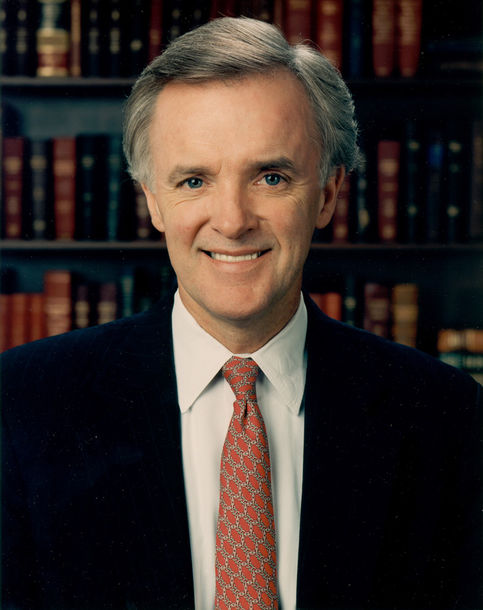
Strict Constructionism is the name given to conservative judicial philosophy in the United States and given lip service by Conservatives regardless of their actual preferences in judicial decisions. It correctly posits the Constitution as the ultimate guide/constraint on public policy by all three branches of government, and insists that the "plain meaning of the text" should guide any questions regarding the application of the Constitution to public policy questions. In cases where the meaning of the text is open to question, we should be guided by the "Original Intent" of the Framers, as known through the historical documents of the time, particularly the Federalist Papers and James Madison's notes from the Constitutional Convention.

(image from PBS.ORG)


This doctrine is based on a number of fallacies, the most important of which is the assumption that the Constitution was ever intended to be some sort of "sacred writ" immune from interpretation.

The Constitution was (and remains) an explicitly POLITICAL document, in that it was written as it was with the intent of garnering sufficient political support to insure its ratification. When the Framers couldn't garner enough consensus in their ranks regarding a particular topic, they had recourse to a heirarchy of tactics in writing text that was acceptable to a sufficient number of delegates.

As a first resort, they would compromise. We see this in "the great compromise" which resulted in the creation of a bicameral legislature. We also see it in the frequently misunderstood 3/5ths compromise.

(image from the B.S. Report)


However, the Framers frequently couldn't compromise, either. In such cases, they would intentionally leave the language of the Constitution vague. An example of this intentional vagary can be seen in the tension between the President's role as "Commander in Chief" and the enumerated powers of Congress over the military. The "plain language" of Article I gives control of the military budget to Congress. However, the "plain language" of Article II makes the President the final authority regarding military operations. Can Congress prevent a military operation by refusing to fund it? Can the President order a military operation without obtaining a Congressional appropriation?

We don't know what the Framers thought about this, because the "Framers" disagreed on the subject. The "original intent" of the Framers was different from faction to faction. Consequently, the determination of these questions has been left to 1) the Supreme Court, which has frequently refused to intervene in disputes between the other two branches and 2) established precedent. In the example of military authority, the relevant precedent was set by Theodore Roosevelt. When Congress refused to appropriate money to send "The Great White Fleet" on a show-the-flag tour of the world, Roosevelt ordered them to sail halfway round the world. Congress then had to appropriate enough money to get the fleet back to the United States, completing the circumnavigation. 3) Clarifying legislation, such as the War Powers Act, which every subsequent President has insisted is unconstitutional.

 (image from kirkwoodk12.mo.us)

On certain issues, the Framers couldn't compromise, and neither side would tolerate vague language regarding the issue. In such cases, the Framers would insert both mutually contradictory directives in the Constitution, so that each side could point to a particular provision and claim victory. The best known example of this is the flatly irreconcilable vision of Federal power made in the "necessary and proper" clause in Article I, Section 8, and the 10th Amendment.

In cases where the Framers deliberately tried to have it both ways, the Supreme Court has been stuck trying to untangle the mess. The best example of this is the case of McCullough v. Maryland, where the Supreme Court explicitly rejected the idea that Congress was limited to those powers explicitly granted to it in Article I section 8, (with all other powers being reserved to the States) and instead embraced a more expansive view of Federal power based on the idea of "implied powers", i.e. powers the Feds can safely be assumed to have simply because governance is impossible without them. Subsequent Supreme Court decisions have extended and reinforced this view, and constitute a complete refutation (refudiation?) of the central tenet of the Tea Bagger view of Federal power.

(Sorry, I couldn't resist.  Image from daemonsbooks.com)

Finally, when the Framers couldn't compromise, couldn't fudge, couldn't agree to have it both ways...

they simply ignored the issue. The best example of this is the question of slavery, both in new states and in the free states. This particular tactic lead us into the Civil War.

Another hole in the strict constructionist view of the Constitution is the fact that the Framers themselves explicitly repudiated the doctrine. James Madison refused to make his notes from the Constitutional Convention public for two decades, because he didn't want them being used to determine "original intent" in interpreting the Constitution. George Washington didn't believe the Constitution would remain in effect more than 20 years or so. And Thomas Jefferson (more properly viewed as a "Founding Father" than as a "Framer" explicitly disavowed the original intent doctrine in a letter he wrote to Madison in 1789, in which he asserted "...the earth belongs in usufruct to the living: that the dead have neither rights nor powers over it."

Any appeal to the original intent of the framers is contrary to the original intent of the Framers.

(image from visitingdc.com)


Conservatives will object to my arguments on the basis of "consequence" (or, the fallacy of the slippery slope). If the meaning of the Constitution is open to interpretation, what keeps any potential tyrant from deciding the Constitution allows him to become dictator?

The answer is obvious. It is not the responsibility of dead men to protect us from tyranny, it is our own responsibility. The dead men have given us the best possible guidance in doing so, but that guidance consists of hints, general principles and precedent. They have not given us a sacred document that must be read according to the "jot and tittle" standard applied by crazy fundamentalists to the Bible.

(image from vaticanassassins.org


Finally, the whole notion of judicial conservatism is merely a political slogan designed to delegitimize progressive judicial decisions. Conservative jurists are every bit as activist as liberal jurists, as is shown by the Supreme Court's recent decisions in Citizens United and the lifting of Chicago's gun ban.

When you overturn 200 years of stare decisis, you're a fucking activist.

(image from enormousthrivingplants.blogspot.com

Tuesday, June 29, 2010

The illegal immigration debate.

This is a very, very tough issue for me...

I start with the postulate that the only legitimate function of government is to promote the welfare of its citizens.  This is something at which they typically fail, but in my view it's the only thing they ought to be doing.

(image from photobucket.com)

If this is the case, then our immigration policy should be clear.  We should only admit those immigrants likely to enhance the general prosperity of our economy.  That would seem to consist of workers currently being admitted as temporary workers under H1 visas.  If we can get them to stay, we should.  They tend to be highly paid, and by definition they have skill sets for which there's constant demand, even in this economy.  The argument has been made that this has the effect of depressing wages in the nursing and tech industries.  By and large, I'm willing to allow that, as providing a more generalized benefit to the country than the cost it exacts from a subgroup of the nation's citizens.  I think the health of the whole country suffers when there's a nursing shortage.

 (image from eduinreview.com)

This logic does not apply to H2 visas, nor does it apply to illegal immigrants.  The effect of increasing the labor supply in the fields of agriculture or construction or hospitality will again be to depress the average wage in those fields.  But this increased productivity benefits a far more narrow segment of the citizenry than is the case with nurses or programmers.  Meanwhile, the number of people whose wages are impacted is much larger in the case of low-skill, low wage jobs.  Instead of the costs being born by a small segment of the middle class, the costs are born by the working and lower classes.  And the difference between $8 and $12 per hour is MUCH greater than the difference between $20 and $30 per hour.

It is constantly claimed that "Americans don't want these jobs."  That is demonstrably untrue.  Americans don't want those jobs at that particular rate of pay.  If you pay a busboy $12 an hour, you'll have a line of American applicants stretching into your dining room.  If you can't afford to pay a living wage to your employees, you need to raise your prices.  And, I want to see your books, because you're doing something wrong.

On the other hand...
it's awfully hard for me to justify telling Mexicans that they can't look for work in parts of our country that we stole from them, in an unjustifiable war of aggression aimed at creating more slave states.


Monday, June 21, 2010

There's no justice...

My son and I are re-watching HBO's Carnivale.  The show originally ran for two season's, between 2003 and 2005.

I loved it at the time, and seeing it again reminds me of it's brilliance.  Some things I loved at the time (Hill Street Blues, Babylon 5) don't hold up well.  I don't know if I've changed or the times have changed.  I do know that Highlander is now unwatchable.  I can't believe that Christopher Lambert is dating Sophie Marceau.  In fact, I see it as evidence of some sort of nefarious conspiracy...

(image from la-star.com)

Carnivale however, holds up brilliantly.  It may be the most terrifying thing I've ever watched, and I'm including Twin Peaks in my list of comparisons.  Of course, Twin Peaks was on broadcast...

(image from John Kenneth Muir, on wordpress,com)

and we're not talking clumsy, bludgeoning, slasher flick terrifying.  We're talking quiet, disorienting, creepy terrifying.  The slasher flick, unless very well done, either bores me or merely grosses me out.  Carnivale combines the grinding, hopeless despair of the Dust Bowl with the savagery of ignorant poverty.  It throws in the voyeuristic creepiness of physical deformity, and contrasts it with the mundane details of the daily life of the exhibits in a freak show.  It adds the menace of a supernatural struggle between good and evil which only rarely manifests itself openly, but is at the same time ubiquitous.  Carnivale's opening credits scare the living hell out of me, and they're simply clips of news footage from the era.


  (images from btvision.com, starpulse.com & ign.com)

It was too good to last, of course.  HBO canceled it after two seasonsJust like Deadwood.  Just like Rome.  The difference is that I know how Deadwood ended; it's a matter of verifiable historical fact.  And I, Claudius is essentially the sequel to Rome, despite having been filmed 30 years earlier.  But I will never, ever know how Carnivale ends.  I think television interruptus  is even more frustrating than the other kind...

it never goes away.