Showing posts with label elites. Show all posts

Sunday, March 4, 2012

An Empirical critique of Libertarianism

I have a certain respect for Libertarianism that I lack for Conservatism, at least in its American form. Conservatism, like all political ideologies, is a rationalization for the interests of a particular constituency. But since Conservatism supports the interests of existing elites, it has a much tougher time articulating a coherent set of principles.
(unlabeled images from Wikimedia Commons)

REAL Libertarians (and I'm not speaking of Racism entrepreneur and anti-choice activist Ron Paul here) are the intellectual heirs to the minimal government, individual liberty thinkers of the 18th century that political scientists call "Classical Liberals".
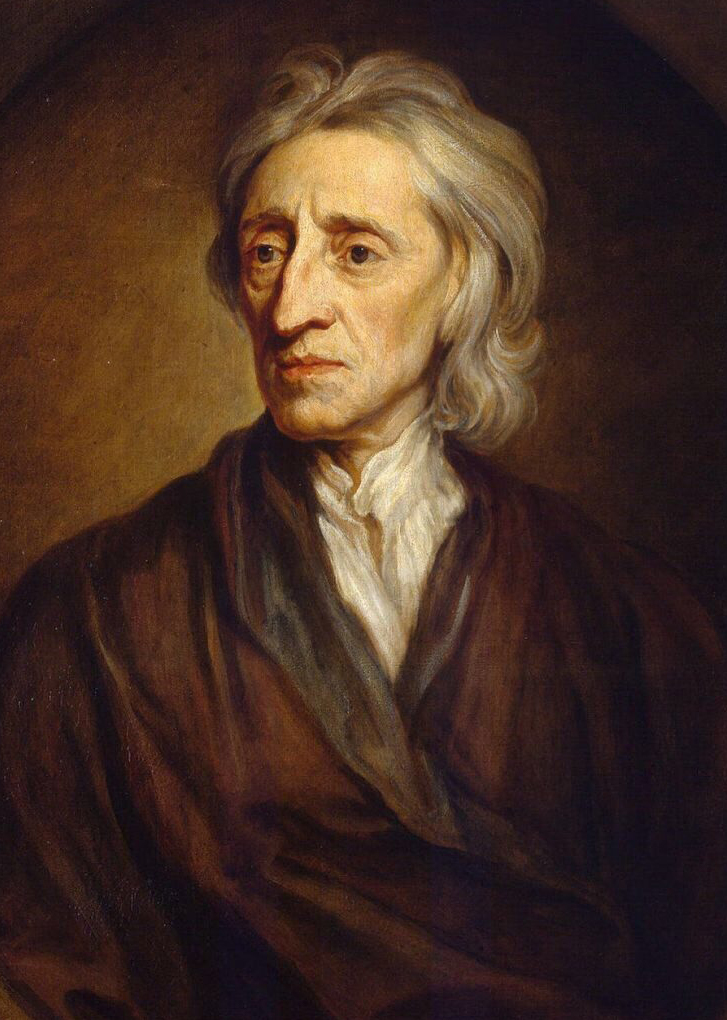

They believe in maximum liberty.  They don't want government doing anything except enforcing contracts, and they'd be happier if there was some way to outsource that function.


But if we start with their initial postulates, we see that the stated objective and intent of their proposed Utopia are to maximize individual liberty. This is a laudable goal...

if we can agree on a definition of "Liberty", and the desirability of maximizing it, and deciding how to reconcile the liberties of different individuals, and how to avoid the Hobbes Problem.

It's also clearly a normative judgement; it's based on the judge's individual preferences, and beliefs, and biases. This is not an ideal starting point from which to analyze human social behaviors. And the analysis of such behaviors must clearly inform any attempt to create social institutions, regardless of whether the goal is the maximization of individual liberty, or order, or prosperity, or any of the other metrics proposed by 2500 years of political theorists.


My preferred analytical starting point is cognitive/biological. Human beings are organisms attempting to survive and reproduce within an ecosystem. And while the nature of that ecosystem, and the adaptive behaviors necessary to succeed within it have changed radically since the last Ice Age, we remain what biological evolution made us: social primates adapted to hunting-gathering in small groups.


Human beings form dominance hierarchies in any group you place them.  If you put 3 people in a room, one or more of them will behave as an alpha. In hunter-gatherer groups, the small size and intimacy of the group tends to keep the dominance hierarchy relatively egalitarian and informal.

But the adaptive behaviors required for human reproductive success have changed radically since the end of the Ice Age. The first new adaptive strategy came with the domestication of other social animals, and the eventual development of pastoralism as an alternative survival strategy to hunting-gathering.

Animals represent the very first form of wealth that didn't have to hauled around by you or your family. They could move livestock around under their own power. People could have more than they needed. People could be more than well-fed, they could be rich.


Herding is like anything else; some people are better at it than others, some people are luckier than others... the adoption of pastoralism created the first sharp, long-term differences in social status.

If you have a huge herd of cattle, and sheep, and goats, you can host an enormous Tony Soprano style barbecue for the entire tribe, and important people from the next tribe over, every time there's a funeral, or a wedding, or religious service. You can send the guests home with a week's worth of greasy leftovers. You can take the less fortunate some starter stock for a new herd, or food. You can reward your friends...

and you can punish your enemies.

(Okay, this image from Tony Soprano's Pizzeria. Not kidding)

So what I'm telling you is that by about 4000 BC we run into the first problem with the libertarian model. The effect of increasing inequality of circumstance, combined with human social dominance mechanics, are what lead to the earliest forms of the State which Libertarians seek to minimize or to eliminate. And I'm not guessing about this; we've got the archeological evidence for all of this.
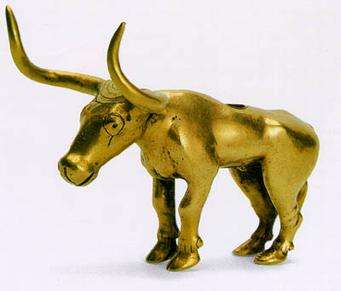

(image from The World of Ancient Art site)

From the libertarian standpoint, things just get worse with the domestication of the Horse, and the invention of the Wheel. The quantum improvement in transportation technologies available to elites allowed them to exert their influence at greater distances. It increased the geographic range of their patron-client networks. Most importantly of all...

the world got bigger.

Transportation improvements brought together groups of previously isolated people, with different cultures and practices and life-styles. The difference between "us" and "them" got a lot sharper, as "they" became people who talked funny, and who dressed funny, and who didn't cover their dead with red ochre. These recently introduced neighbors traded.  They intermarried.  They raided each other, particularly for cattle. They competed, and that competition was lead by elites who increasingly were coming to resemble the State. 

And the technologies kept improving. Around 3200 BC some nameless genius in Egypt invented the sail. Other geniuses started using the sail on ocean going vessels. The distances across which elites could exert influence kept getting bigger. As the distances got bigger, they included more people, and the patron-client network maintained by powerful men more elaborate and less egalitarian. Finally, ancient Sumeria took the next step in making the State inevitable.


The State, (which most people think of as "the government") has been with us one hell of a long time. It is the expression of social dominance behaviors applied to very large communities. Each new improvement in communications and transportation technology has created larger communities, and in every human community there will be elites and masses. The "nation-state" is a fairly new invention, but it is the logical outcome of a process which continues today. 

The Libertarian preference for a minimal or even absent State fails to take into account why States exist in the first place. As long as there are people, and those people share membership in a community, you will have a State of some sort.

The history on this is irrefutable.


Sunday, May 16, 2010

In case I wasn't clear...

in my post on financial bubbles, let me eliminate all ambiguity.  


"Capitalism", as practiced in the United States, and most of the developed world is fundamentally corrupt at its core.  Its successful practitioners almost invariably lie, deceive, mislead, misrepresent, bully, threaten (both tacitly and explicitly), bribe and steal.


The above behaviors are carried out, over and over again, in the course of daily business.  It is done as part of routine business operations, and it takes place as part of dominance behaviors having nothing to do with business operations.  This behavior is carried out by a particular subculture to whom we may refer as "Commercial Elites".  The behavior itself is a form of coercion, in that it leverages asymmetries in power between parties in a transaction in such a way as to cause the weaker party to act in ways it would not otherwise have acted.  Such coercion may take the form of a bribe rather than a threat.


(image from candlemaking.com)


Commercial Elites are no more innately evil than any other identifiable subgroup of our species.  But they have "power", in the sense that they can impel behavior in others that would not otherwise be present.  And, like any other group of human beings with power, they use that power to influence what we are told are purely "market" transactions.  


Every elite will promulgate an ideology (often a religion) that legitimates both their greater power and the use of that power to further their own interests.  Commercial Elites promote a particular type of Capitalism that is excessively deferential to those elites, that exalts its practitioners to the status of heroes, and that defends the privileged position of Commercial Elites by predicting catastrophic economic consequences should their behavior be moderated.


(image from tree-hugger.com)

It would be a mistake to conflate coercive business behavior with crime.  Lots of utterly sleazy business transactions  are perfectly legal.  They are legal because Commercial Elites invest trivial sums of money (by their standards) in the campaigns of politicians.  The fact of their legality is itself a product of the power of Commercial Elites.  But of course, there's plenty of criminal behavior, too.


It would also be a mistake to conflate every single business person with the coercive subset of that group.  I have very little experience interacting with this group, so you should ignore my estimate that no more than 40% of them are actively corrupt (in the moral rather than legal sense).  But many, many more members know about coercive business practices and stay silent. 

And of course, any subset of humanity is as corrupt as Commercial Elites.  But lacking power, their corruption lacks specific, obvious national consequence.

(image from silive.com)

"Capitalism", (by  which I mean the practice of Commerce as it is carried out in the United States today) has been successfully legitimized in the minds of the American mass populace by  associating it with such potent nationalist symbols as "liberty", the "founding fathers", and "rugged individualism" despite having no relationship to any of those things.  This makes attempts to moderate the behavior of Commercial Elites through public policy processes inherently difficult.

"Capitalism" (much like Marxism) has also been legitimized by claims that its outcomes are somehow rational, or scientific, or objective.  And in fact, one can imagine a world where demand and supply are always moderated by price and price only.

(image from freecomputerwallpaper.com)


It has been said so often that it is a cliché; the "market" is a purely intellectual construct, an abstraction employed because of its utility both descriptively and predictively...


and then, having covered their intellectual asses, the Capitalism Apologists promptly reify the market, citing the "efficiency" of an admitted intellectual abstraction in defending existing supply and pricing arrangements.  But those existing arrangements are not typically arrived at through the beautifully meshed operations of supply and demand mediated by price.  So-called market outcomes are primarily the result of power differences between the parties in an transaction. 


(image from activewin.com)

Capitalism is also cited as the primary causal variable in contemporary American prosperity.  This assertion calls for two responses...


the extent of American prosperity is massively overstated.  And Americans cannot internalize that fact beyond a vague anxiety about their personal circumstances..  We are not the 
richest country in the world.  We don't have the best healthcare in the world (if by "we" you mean most Americans).  We don't have the most leisure time in the world.  We don't have the best education system in the world.  We are a top 10 country, not number 1.  But if you can convince people that we are number 1 because of an almost religiously fundamentalist devotion to practicing economic activity in a way that defers to your personal interests....


that turns out to be an effective tactic.


American prosperity is not due to "Capitalism". (Again, as it's practiced here.)  American prosperity, such as it is, is a complex phenomenon.  Like all complex phenomena, it is multi-causal and changes over time.  But here's a striking relationship...  the public policies advocated by Capitalism apologists don't seem to have resulted in greater prosperity for the American people, despite their promises.  


It is claimed that Capitalism takes advantage of the particular expertise of private industry, but in fact, our so-called "Captains of Industry" are no more competent (just as they are no less moral) than any other subset of humanity.  There are smart business people, and there are business people that are astonishingly dumb, in about the same proportion you'd find among teachers, or cops, or government bureaucrats.  Furthermore, the relationship between competence and ultimate success is tenuous at best.


(image from solidprinciples.com.  Really.)

Ideologies are programmatic.  They advocate behaviors which, it is promised, will result in certain outcomes.  But, the public policies advocated by apologists for the American practice of Capitalism don't give us the outcomes the apologists predict.  Their supply-side tax cuts don't result in economic growth beyond the anemic Keynesian effect one would expect.  Their massive deficits don't magically vanish under a "rising tide" of economic growth that always comes in weaker than they promise.  And their fanatical deregulation inevitably empowers Commercial Elites to employ ever more coercion against those with whom they transact business.


The benefits which derive from American Capitalism have been grossly exaggerated.  The economic and social costs of regulating the behavior of Commercial Elites has been exaggerated even more.


Commercial Elites will ruthlessly exploit those with whom they do business to the extent that the existing regulatory environment allows them to do so.  As it is presently constituted, the regulatory environment of the United States fails to deter coercive business practices, including practices blatantly illegal under current law.  


Increasing regulatory restraint on Corporate Management will not make us poor.  It's not anathema to the principles of the Founding Fathers.  And it's the only defense we have against our rapacious exploitation by a privileged, hypocritical elite.

It occurs to me that I still haven't watched "Capitalism, a Love Story" by Michael Moore.  I think it's on pay-per-view...


certainly, the Penguins don't have any games scheduled.